
From the Wilderness to the Remnant

Pull up a chair and take a sip. We need to talk about a story we think we know, but through a lens most are too afraid to use. We often discuss the twelve-year-old boy in the Temple (Luke 2) as a perfect Sunday school lesson. We focus on the “Grace” and the “Holiness,” but we miss the gritty truth: Jesus suffered. Even as the Son of God, He was a “man of sorrows, and acquainted with grief” (Isaiah 53:3). He knew the physical reality of having “no place to lay his head” (Luke 9:58). But let’s be direct about the gap between His experience and yours. He was born into the Holiness we spend a lifetime fighting to find. When He “stayed behind” in Jerusalem, He was in His Father’s house, a place of sanctuary.
When I ran away at twelve, I wasn’t looking for a temple; I was escaping a wrath that no child should ever know. I was homeless until I was nineteen, navigating a wilderness that wanted to swallow me whole. If you’ve ever been “the used one,” “the broken one,” or “the runaway,” you need to understand the spiritual laws that were at work while you were just trying to survive.
1. Chronos vs. Kairos: Your Time in the Wilderness

In the “wilderness,” you don’t see God’s hand; you see survival. We live in Chronos (earthly, linear time), where years of struggle feel like an eternity of abandonment. But God operates in Kairos (His appointed time).
While the world looked at a twelve-year-old runaway and saw “homeless” or “crazy,” God saw a survivor being forged. Most people think that if you aren’t in a “holy place,” you aren’t with God. But the Principle of Divine Presence teaches us that God dwells with the “contrite and lowly in spirit” (Isaiah 57:15). Jesus was in the Temple because that was His “it” for that moment; the street was yours. Neither of you was alone. Your survival was your first sermon.
2. Prevenient Grace: The Strangers in Your Shadows

How do you survive when the people meant to love you offer only wrath? You survive through Prevenient Grace, the grace that moves before you even know God’s name.
Looking back at your darkest seasons, can you see the strangers who saved you? The meal that appeared? The safety that shouldn’t have been there? Those weren’t accidents; they were Manna. Hebrews 13:2 reminds us that by showing hospitality to strangers, some have entertained angels unawares. God was “budgeting” for your survival before you ever knew how to pray. He knew you didn’t see Him in the wilderness, and He loved you enough to protect you anyway.
3. The Principle of the Remnant

Have you wondered why you are “one of the few” who made it out of the fire with your heart intact? This is the Theology of the Remnant (Isaiah 10:20-22). The Remnant (she’ar) are those preserved through a catastrophe for a specific purpose.
Not everyone survives the “used” and “abused” seasons with their heart intact. Many become the very wrath that hunted them. If you can still love and give, you have been “refined in the furnace of affliction” (Isaiah 48:10). You were pulled out of the fire to be “Salt and Light.” You carry a grace that people who have lived easy lives can never manufacture.
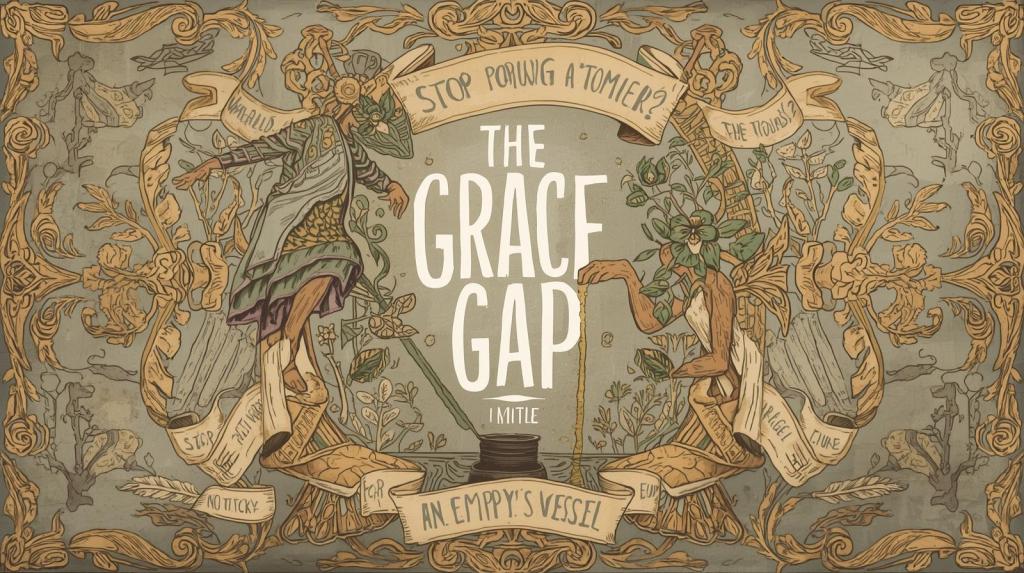
4. The Grace Gap: Stop Pouring from an Empty Vessel

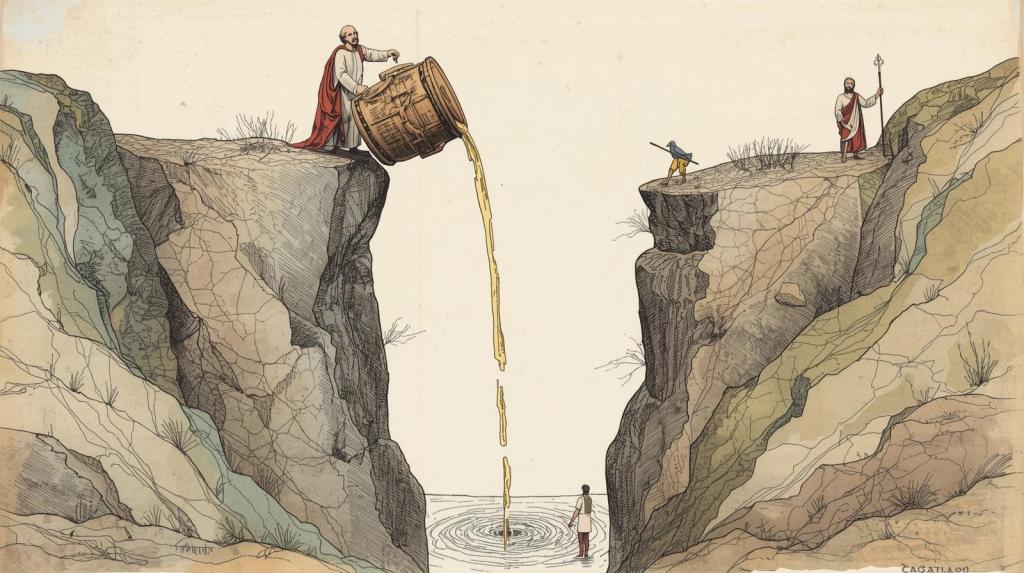
Here is the jagged truth that might hurt: You are giving the world the grace you refuse to give yourself.
You’ve become the “Grace” for other people because you know what it feels like to starve for it. You pour out mercy, you offer healing, and you are the first to forgive a stranger. But have you left the younger version of yourself, the one who was cold and hunted, standing out in the rain?
The Bible says to “Love your neighbor as yourself” (Mark 12:31). If you forgive the world but hold a grudge against the child you used to be, you are missing half the commandment. You are saying God’s blood is enough for the world, but not enough for your history. You cannot truly honor God’s work in your life until you give your younger self the same Grace you’ve been giving the rest of the world.
5. The Teachable Application: Closing the Gap
Your survival was not a mistake. God’s understanding of your life is greater than the pain you feel (Isaiah 55:9). He doesn’t see the labels the world tried to stick on you.
| The World’s Label | The God’Sip Truth |
|---|---|
| Homeless / Runaway | The Remnant |
| Used / Broken | Redeemed |
| Crazy / Unwanted | New Creation (2 Cor 5:17) |
The Spiritual Law: God is the only one with the authority to name you.
The Remnant Study Guide: From Survival to Sanctuary
Being part of the Remnant means you were preserved for a purpose. Use this guide to help you reconcile your “wilderness” years with the Grace you carry today.
Phase 1: Identifying the Wilderness (Chronos vs. Kairos)
- The Principle: God’s presence isn’t limited to a perfect life. He is present in the “Lowly Spirit” of the struggle.
- The Scripture: “The Lord is close to the brokenhearted and saves those who are crushed in spirit.” (Psalm 34:18)
Phase 2: Recognizing the Manna (Prevenient Grace)
- The Principle: God provided “angels in disguise” (strangers) to sustain you when your foundation was gone.
- The Scripture: “Do not forget to show hospitality to strangers…” (Hebrews 13:2)
Phase 3: Owning the Identity (The Remnant)
- The Principle: You are not “damaged goods”; you are a “refined vessel” kept to be “Salt and Light” for others.
- The Scripture: “See, I have refined you… I have tested you in the furnace of affliction.” (Isaiah 48:10)
Reflection Questions for the Soul
- The Temple vs. The Street: Looking back at your “wilderness” season, can you see moments where God was present even though you weren’t in a “holy place”? How does that change your view of your past?
- The Hidden Manna: Who were the “unlikely angels” in your life who provided a meal, a kind word, or a moment of safety when you were at your lowest? Take a moment to thank God for that Prevenient Grace.
- The Grace Gap: You likely find it easy to give grace to a stranger or a friend. Why is it harder to give that same grace to the younger version of yourself? What would you say to that younger version of you today?
- Renaming the Past: If you were to stop using the world’s labels (broken, used, crazy) and start using God’s labels (Remnant, Redeemed, New Creation), how would your story change?
- The Remnant’s Mission: As a survivor who still chooses to love, how can your “first sermon” (your survival) help someone else who is currently in their own wilderness?
Sip of the Day: The Remnant’s Restoration

The Truth: You cannot be a sanctuary for others if you are still a battlefield for yourself.
The Application: Today, turn that pitcher of mercy toward your own heart. Stop apologizing for how you had to survive. The world called it a tragedy; God used it as a training ground.
Your Affirmation: “I am not the labels the wilderness gave me. I am the Grace that survived the fire. I choose to give myself the same mercy I give the rest of the world. I am the Remnant, and I am at peace.”

Don’t Worry About Burning Ur Lips on This Tea