
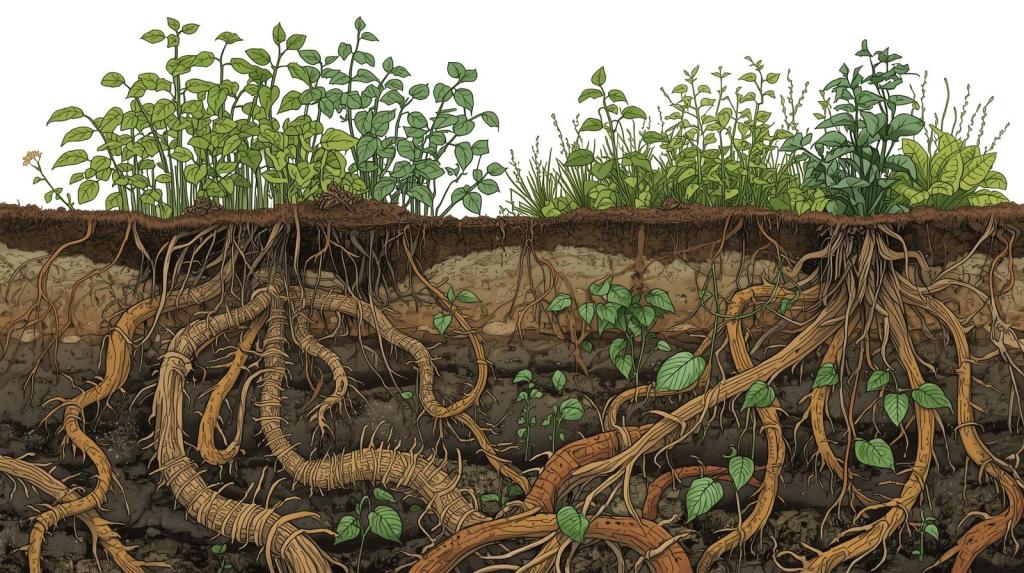
Grab your mug, friend. Let’s sit for a moment with a mystery that touches all our lives: the question of why good and evil coexist in this world. It can be confusing and even painful to witness, but Jesus gave us a gentle answer in the Parable of the Weeds (Matthew 13:24-30).
The Simple Story, The Deep Comfort

The story is about a field where a good landowner sowed only good seed—life and beauty were His intention. Yet, while He waited patiently, an enemy slipped in and scattered weeds. Evil was never part of the original design; it was an act of quiet sabotage.
When the crops grew up, the servants were distressed: “Shouldn’t we rip out the bad right now?” It’s a question we often ask ourselves when we look at the world’s suffering and the presence of evil.
The Theological Principle: Gentle Patience (Divine Longsuffering)

The landowner’s response is the key, and it’s a profound act of love called Divine Longsuffering, or Macrothymia.
Instead of allowing immediate cleanup, the owner said, “No, lest in gathering the weeds you root up the wheat along with them.”
This patient delay reflects God’s heart:
- A Desire for Wholeness: As 2 Peter 3:9 assures us, God is “not wishing that any should perish, but that all should reach repentance.” He allows time, hoping that the heart currently producing the “weeds” of evil might yet yield “wheat.”
- The Gift of Freedom: God gives us freedom—a freedom so valued that He allows us the space to make even harmful choices. He waits for us to choose Him freely, never forcing our hand, even in the face of evil.
The Pain of Entanglement
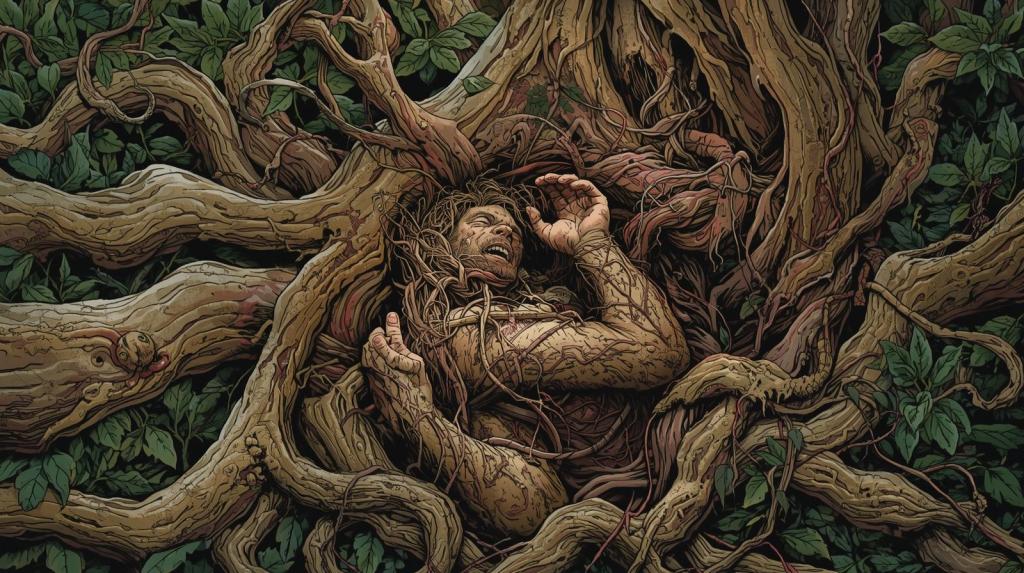
The reason for this Divine Longsuffering is the heartbreaking reality of entanglement. God knows that to rush judgment would cause unnecessary heartache to the very people He is trying to protect.
Think of a loved one whose life is tragically tangled in the “weed” of evil or destructive habit. While that behavior causes pain, they are still a precious part of your life (the “wheat”). To instantly judge and destroy the weed might mean tragically crushing the person, too, cutting off their connection to hope and redemption. Or consider our own struggles: Even within our own hearts, we know we have good intentions and deep faith (the wheat) mixed with moments of fear, selfishness, or doubt (the weeds). God doesn’t uproot us instantly for our flaws; He waits patiently for the good seed to mature.

God knows there is always more that meets the eye. He is letting the good and evil grow together, not out of indifference, but out of a patient love that seeks to save every last bit of wheat. He knows that to prematurely cleanse the field would do more harm than good to those He cherishes most.
The Takeaway Sip

We are called to live patiently in the midst of evil, trusting in God’s perfect timing and His immense desire for redemption.
Scripture for Reflection:
“Be patient, therefore, brothers, until the coming of the Lord. See how the farmer waits for the precious fruit of the earth, being patient about it, until it receives the early and the late rains.” (James 5:7, ESV)
Reflection Question:
How might adopting God’s “long view” and patience change the way I interact with a person or situation tangled up with evil in my life this week? Leave your answer in the comments.

Don’t Worry About Burning Ur Lips on This Tea